
Concrete retaining walls in Temple TX - a wall that holds the slope and drains well
Yard washing out or an old wall leaning? We build concrete retaining walls sized for your slope, your soil and the water behind them.
- Fully licensed and insured.
- Free estimates at your property.
- We respond within 1 business day.
What does a concrete retaining wall do for a sloped yard in Temple?
A concrete retaining wall holds back soil that pushes sideways against it, so the ground behind it stays where you want it. At A&L Temple Concrete Construction, we build poured concrete retaining walls in Temple, TX, with the footing, steel and drainage planned for your site.
Most calls start with a slope that keeps sliding toward a patio or driveway, or a strip of yard you'd like level enough to use. The price moves with how long and tall the wall is, what the soil's like, how much water runs at it, what sits near the top and how easy it is to get equipment in. The schedule mostly turns on the weather, because we won't dig a footing in soaked clay or pour into a storm. Your written quote after I walk the site gives you your own figure, with what's in it and what isn't.
How do you know your yard needs a retaining wall?
Soil washing onto concrete
After a hard rain you find mud and dirt across your patio, sidewalk or driveway. That usually means the slope above is moving with the water, and every storm takes a little more until the edge of the slab starts losing ground underneath.
An old wall leaning out
A wall that tips forward or has opened up cracks is usually being pushed harder than it was built for, often by water that can't get out behind it. Waiting tends to let it lean further, and a wall that's failing is harder and messier to take out.
Water seeping at the base
Wet spots, stains or a steady trickle along the bottom of a wall mean water is collecting behind it. It usually points to drainage that isn't working, and it tends to get worse with each wet season.
How we build concrete retaining walls
We don't size a wall by its height alone, so I start by looking at the slope, the soil and anything heavy near the top, like a driveway, a shed or a parked truck. Then our crew digs out for the footing, the wide base the wall stands on, sets the rebar, the steel inside that helps the concrete hold against the soil, builds the forms and pours. Behind the wall we put in drain rock wrapped in filter fabric, which keeps dirt from clogging the rock, and set outlets so water has a way out instead of piling up against the concrete. Once the wall is strong enough, the soil goes back in packed layers and we shape the ground at the top so rain runs off rather than soaking in behind it.
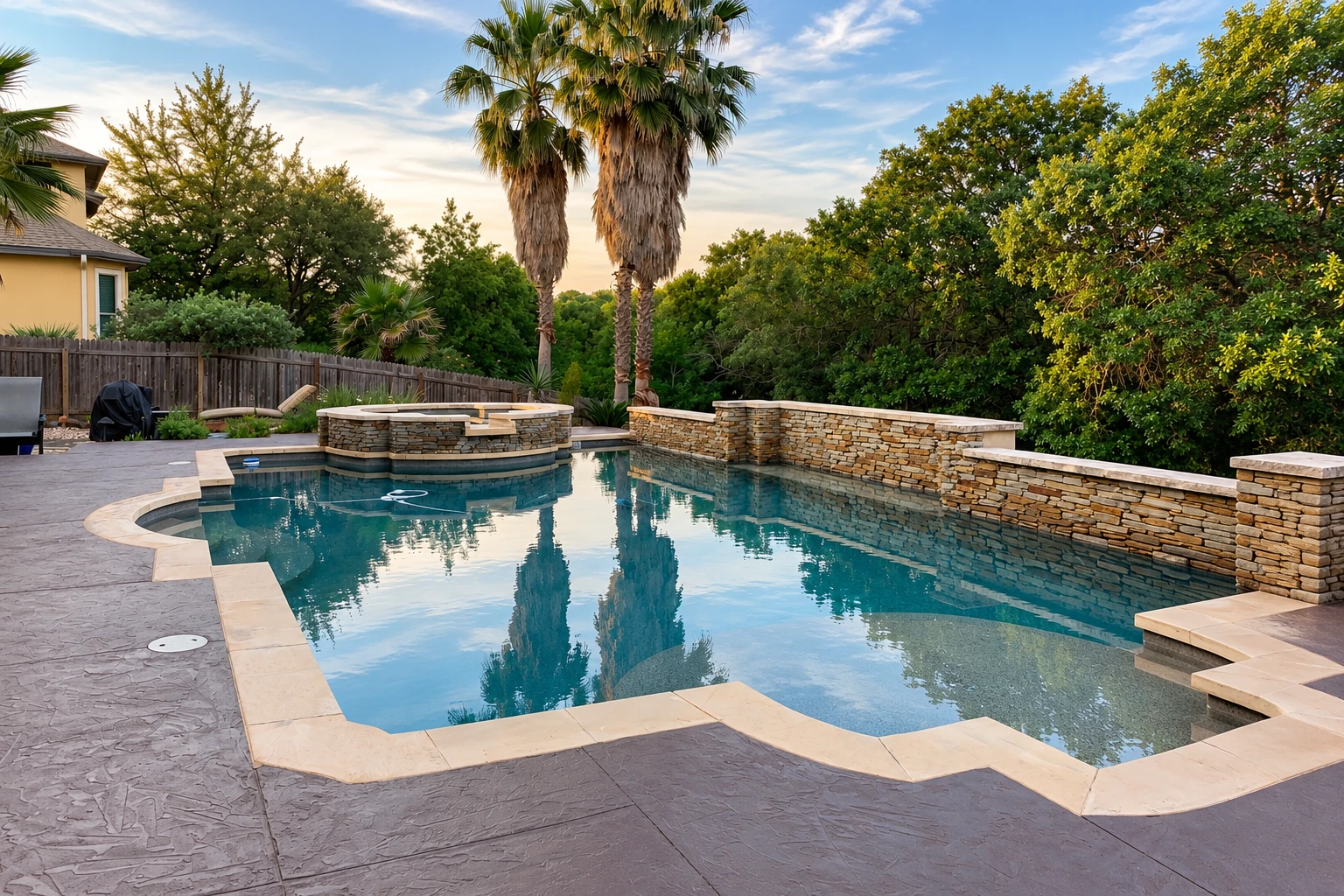
A wall is often what makes the rest of the yard possible. Cutting into a slope can open up a level pad for a shop or storage building that needs concrete floor installation, and on sloped lots a wall is often what holds the ground around concrete pool decks. If you're planning either, tell me at the estimate so the wall and the slab get laid out together.
Low walls for the yard and garden
These suit a modest change in grade around beds, a patio edge or a walkway, where the wall mainly keeps soil from creeping. They still get a proper footing and a way for water to drain, because even a short wall fails when water sits behind it.
Walls below a driveway or building
Groundwater, a steep slope and the weight of vehicles or a building near the top all add to the push a wall has to resist. If your wall sits below any of those, say so early, since it shapes the footing, the steel and the drainage from the start.
Get a written quote for your retaining wall
We reply to every call and form within one business day. I'll come walk the slope with you for a free on-site estimate, with no pressure to book, then send a written quote.
(254) 791-8043- Based in
- Temple, TX 76501
- Hours
- Mon–Fri: 7 AM–9 PM, Sat–Sun: 6 AM–9 PM
What happens when you call about a retaining wall in Temple?
From your first call to the cleanup, here's how a retaining wall job runs with us and who you'll be dealing with at each step.
Send photos and rough measurements
Call (254) 791-8043 or use the form, and if you can, send photos of the slope, the wall's rough length and height, and anything heavy near the top. That way I come out already knowing what to look for.
Walk the site together
I walk the slope with you and ask about drainage, trees and what the wall has to hold back. You get a written quote that lists what's in it and what isn't, so you can set it next to other bids and see what you're paying for.
Check permits, set the date
Once you say go, we check with the city or county office for your address and tell you what we learn, and if the job needs a permit we handle the application before we begin. Then we set the pour date with the forecast in mind.
Build, pour and clean up
I'm on site with our crew for the forming, the pour and the finishing, so the person who wrote your quote is the one watching it get built. We stay through the cleanup before we call the job done.
Why Temple homeowners call A&L Temple Concrete Construction for retaining walls
The owner quotes and builds
I'm the one who looks at your slope and writes the quote, and I'm on site when our crew forms, pours and finishes the wall. Nothing gets lost between what we talked about and what gets built, because it's the same person.
A landscaper's eye for slopes
We've been in business since 2023, and before that I ran a landscaping company and spent seasons learning on a concrete crew, so I'm used to reading how water and dirt move across a yard. That matters on any wall, and more on the heavy clay we see so often around Bell County.
Covered while we dig and pour
We're fully licensed and insured, so you're not carrying the risk of a crew running equipment and pouring concrete on your property. Every job is backed by our satisfaction guarantee.
If soil is creeping onto your concrete or an old wall is starting to lean, call (254) 791-8043 or send the details through our contact page, and I'll come out and take a look.
Retaining walls, slabs and the clay soil around Temple
Soil mapping for Bell County lists Houston Black clay as the largest single soil unit in the county. Not every lot sits on it, but it's a highly expansive clay that shrinks and swells hard as it dries out and gets wet again. One wall maker's installation guide says expansive clay, soil that compresses and organic topsoil should be left out or properly handled in the design. So we look closely at what we dig into before the wall design is settled, because the ground under your wall is part of the plan from day one, not something to find out about later.
We're based in Temple and work across Bell County and the cities around it, up toward Waco and down toward Georgetown, and the ground changes as you go. We see plenty of heavy clay on jobs in Belton and Harker Heights, so we treat the soil on each site as its own question rather than reusing last week's plan.
Questions about retaining walls in Temple
How much does a concrete retaining wall cost in Temple, TX?
Across the US, hiring a contractor for a poured concrete retaining wall usually costs about $30 to $50 per square foot, and that's a market range, not our price. Where a wall lands depends on the kind of project, where the site is, how complex the design is and the full scope of work. Your written quote shows your own number and what's included.
Why does a retaining wall need drainage behind it?
Water that builds up behind a wall can add a lot of push against it and cause leaks through it. When you compare bids, check that each one includes drainage gravel, filter fabric, drain outlets and ground shaped so surface water runs off. If a bid leaves any of those out, ask why.
Does clay soil in Temple change how a retaining wall is built?
Yes, because clay like Houston Black takes in water fast when it's dry and cracked and very slowly once it's moist. That means a dry yard can soak up a lot in the first hard rain and then hold that water for a long time. We plan the footing and the drainage around the soil we actually find when we dig, not a standard size.
Who marks utility lines before digging a retaining wall?
Calling 8-1-1, the Call Before You Dig line, gets underground utilities marked before any digging starts. We make sure that's done before our crew digs a footing, since a wall trench can run right across a buried line.
How do I compare retaining wall bids?
Ask each contractor how they sized the wall for your site, because height alone isn't enough to size one. The footing, the steel and the drainage should come from a design for your project or from the code that applies, and a contractor should be able to tell you which.
How do I keep a concrete retaining wall working for years?
Keep the drain outlets clear and working, so water behind the wall keeps a way out. Check them after big storms, pull out dirt, leaves or roots that block them, and keep downspouts and sprinklers from dumping water right behind the wall.
Related concrete work around a new retaining wall
Concrete floor installation
Once the ground is held and level, a poured concrete floor gives a new shop, shed or workroom a flat, solid surface to work on.
Concrete pool decks
Backyards with a grade change often need a wall before a pool deck makes sense, and planning both together keeps water draining the right way.
Service areas for concrete retaining walls
A&L Temple Concrete Construction is based in Temple, TX, and builds retaining walls in the 12 cities listed here, including Belton and Killeen, and in others nearby. If you don't see your city, give us a call and ask.
Temple, TX
Send us photos of your slope
Getting your written quote early gives you time to set it next to other bids and ask each contractor the same questions before anything gets dug.